
By Elume Raymond
To understand the true importance of the Africa Cup of Nations, it helps to begin not with football, but with a map.
Not the familiar Mercator projection that shrinks Africa and stretches Europe, but the Gall–Peters projection, which shows the world as it truly is. On that map, Africa dominates the page. Vast, unmistakable, impossible to ignore.
There has never been anything “small” about a football tournament that represents a continent of this scale, history and diversity.
Africa covers around 30.3 million square kilometers nearly three times the size of Europe. It is large enough to contain the United States, China and India combined, with space still to spare. One fifth of the Earth’s landmass is African. Once you register that size, the outlines within it begin to matter too: the borders, the nations, the cultures and the people.
There are 54 recognized countries on the continent, and a population estimated at 1.3 billion roughly 16 per cent of the world’s total. More than 2,000 distinct languages are spoken across Africa, compared to around 300 in Europe. Any tournament that seeks to represent this breadth was never going to be simple, predictable, or easily packaged.
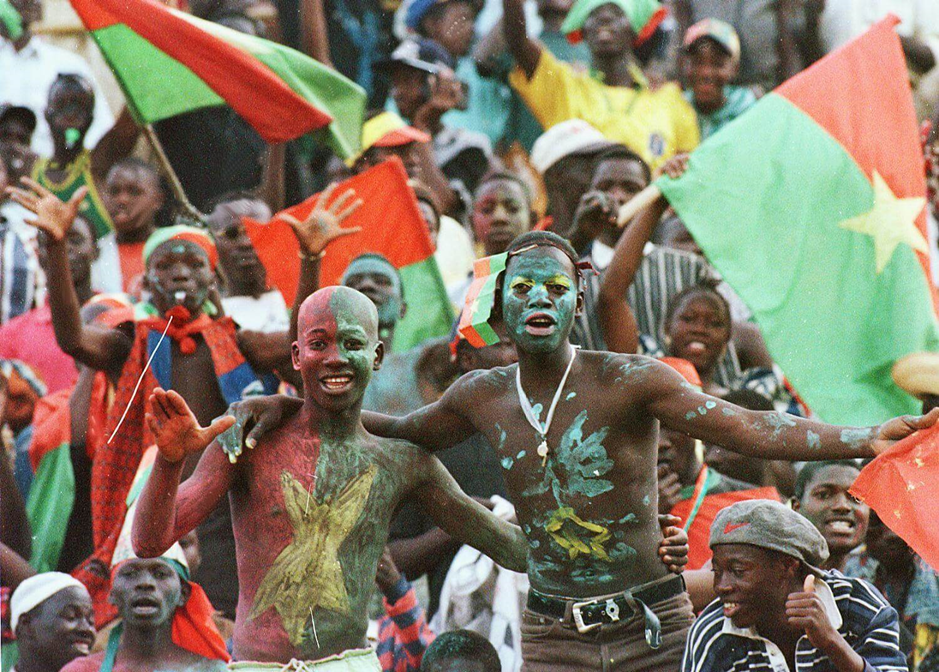
For millions of fans, AFCON is a rite of passage. It is often the first international football tournament they remember watching the moment football becomes personal.
For me, AFCON was my introduction to the wider world. Growing up in Cameroon, I remember watching the 1988 tournament in Morocco and seeing the hosts lose a third-place playoff to their rivals Algeria. It may seem insignificant now, but at the time it mattered deeply. Before that tournament, I had never even heard of Morocco or Algeria. Football opened a door.
This is one of the game’s great powers: its ability to introduce us to places, histories and rivalries far beyond our own experience. And yet, AFCON has long been dismissed by parts of the global football community.
The criticisms are familiar. AFCON is said to disrupt the European club calendar. It should be played in June or July. It should be held every four years, not every two. The pitches are poor. The goalkeepers are unreliable. African football, some say, is plagued by corruption and mismanagement.
AFCON is, without question, a competition that frustrates European clubs and coaches. In its 68-year history this will be the 35th edition it has rarely bent itself to Western convenience. There have been compromises: a move to odd-numbered years in 2013 to avoid clashing with the World Cup, and a summer tournament in 2019 that left players wilting in Egypt’s heat. But AFCON has never apologized for being itself.
Fifteen nations have lifted the trophy. Egypt stands alone with seven titles, including a remarkable hat-trick between 2006 and 2010. Cameroon legend Samuel Eto’o, the tournament’s all-time top scorer with 18 goals, has been clear about what African football needs next: not more talent which is abundant but better education and collaboration.
AFCON is different because it has to be.
You hear it before the first kick of every match, as national anthems are sung not as formality but as declaration voices raised in pride, resistance and freedom. AFCON cannot be covered like a World Cup or a European Championship. It is the tournament of surprise champions, chaotic penalty shootouts and shattered “golden generations.” Just ask Didier Drogba and Ivory Coast.
The absence of widespread football infrastructure across much of the continent means talent has not been industrialized in the same way it has in Europe. The result is a competition shaped by improvisation, emotion, and volatility. Only AFCON could produce stories of teams accused of using witchcraft for competitive advantage and do so more than once. Only AFCON could eliminate a team by the drawing of lots, as happened to Mali in 2015.
And only AFCON could produce a performance like Ndaye Mulamba’s in 1974, when he scored nine goals in six matches for Zaire (now DR Congo), including a final that required a replay. “I’m not sure Africa’s fragile internal politics could take a player doing something so outrageously provocative again,” wrote author Dipo Faloyin.
To understand AFCON fully is also to know the story of Kalusha Bwalya. Zambia’s greatest footballer lost 18 international teammates in a plane crash in 1993. He carried that grief into finals defeats in 1994 and 1996 before finally lifting the trophy in 2012 as Zambian Federation President. “He deserved that moment,” Faloyin wrote, “to stand on the house he rebuilt.”
This AFCON, too, will be its own story.
Twenty-four teams will compete, following the tournament’s expansion in 2019. Some traditional powers are nearing the end of their celebrated eras, while nations such as Morocco, Egypt, DR Congo and South Africa appear to be entering their prime. Changes to FIFA eligibility rules have also brought more first-, second- and third-generation players back to their ancestral homes, reshaping national identities on the pitch.
The football will not resemble what viewers are accustomed to in Europe or South America. It moves to different rhythms, shaped by distinct tactics, conditions and histories.
Every AFCON brings sceptics who try to minimize its significance. But the tournament endures, because it cannot be buried.
AFCON is not an inconvenience. It is not an anomaly. It is a living, breathing expression of a vast continent’s relationship with football — unpredictable, imperfect and full of joy.
And once it takes root, it grows.
Elume Raymond (Twitter/X: @elumeraymond) is a seasoned sportswriter with more than a decade of experience in the field. He leverages data and analytics to deliver in-depth analysis across a wide range of sports events and topics, from regional competitions to global tournaments. Passionate about sports, Elume Raymond is dedicated to sharing his enthusiasm with his audience, offering captivating stories and unique perspectives that engage and inspire.